Part of Sach Suno’s reader-first explainer series. Updated May 6, 2026.
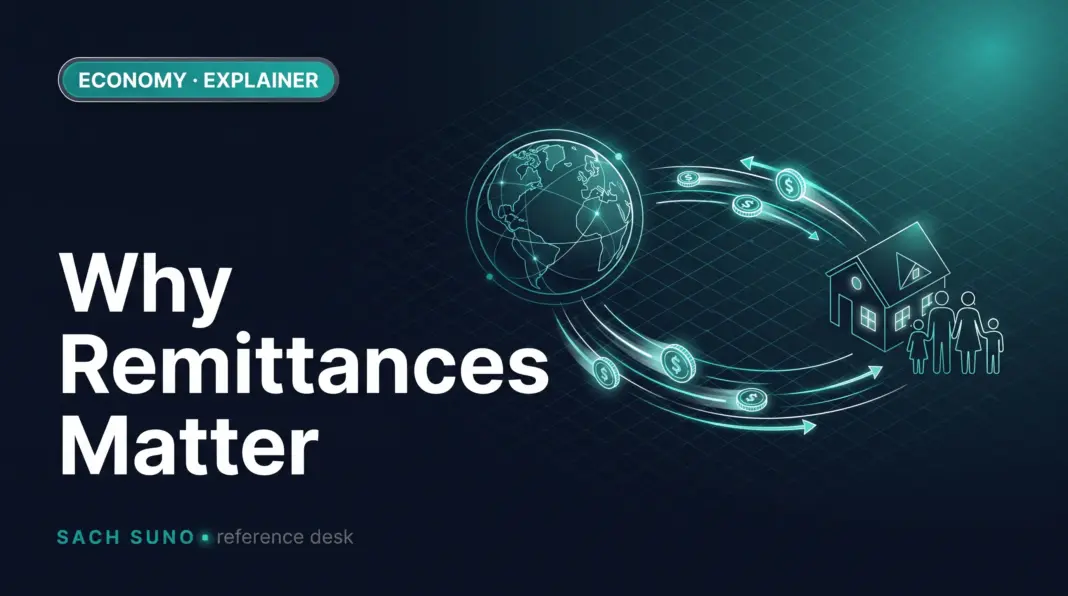
Remittances are money sent home by Pakistanis living and working abroad. They are often discussed as a monthly economic indicator, but their real importance is both national and personal.
Why This Matters
Remittances support household spending, education, housing, healthcare, and savings. At the national level, they help the country pay for imports and reduce pressure on external financing.
Key Takeaways
- Remittances are private household flows, not government aid.
- They can support foreign exchange reserves and the current account.
- Exchange rates, job markets abroad, transfer costs, and trust in formal channels all matter.
- Monthly changes should be read with seasonal and policy context.
Household Impact Comes First
For many families, remittances are part of the monthly budget. They can help pay school fees, medical expenses, rent, construction, or small business costs. That makes them a social indicator as well as an economic one.
Formal Channels Matter
When remittances move through banks and licensed exchange channels, they are recorded and support the formal economy. If people avoid formal channels because of cost, inconvenience, or exchange-rate expectations, official numbers can weaken.
Do Not Overread One Month
A single month can be affected by holidays, exchange-rate expectations, policy changes, or labour market conditions abroad. Better analysis looks at several months and compares the same period in previous years.
Useful Public References
Editorial Note
Sach Suno publishes explainers to help readers slow down, check claims, and understand the context behind public issues. This article is intended as background information, not breaking news or financial advice.
Additional Context for Readers
Remittances matter because they bring foreign exchange into the country without creating external debt. For many households, money sent by family members abroad helps pay for food, rent, education, healthcare, construction, and small business expenses.
At the national level, remittances can support the balance of payments and reduce pressure on reserves. But they are not a substitute for exports, investment, or productivity growth. A country still needs to produce more value if it wants durable economic strength.
Readers should watch both the total remittance figure and the channels used. Formal banking channels help the economy more visibly because they enter official reserves and data, while informal channels can hide the true scale of flows.
Useful Public References
- State Bank of Pakistan: Workers remittances
- World Bank: Migration and remittances
- KNOMAD: Remittances data
Last reviewed: 2026-05-07.