Part of Sach Suno’s reader-first explainer series. Updated May 6, 2026.
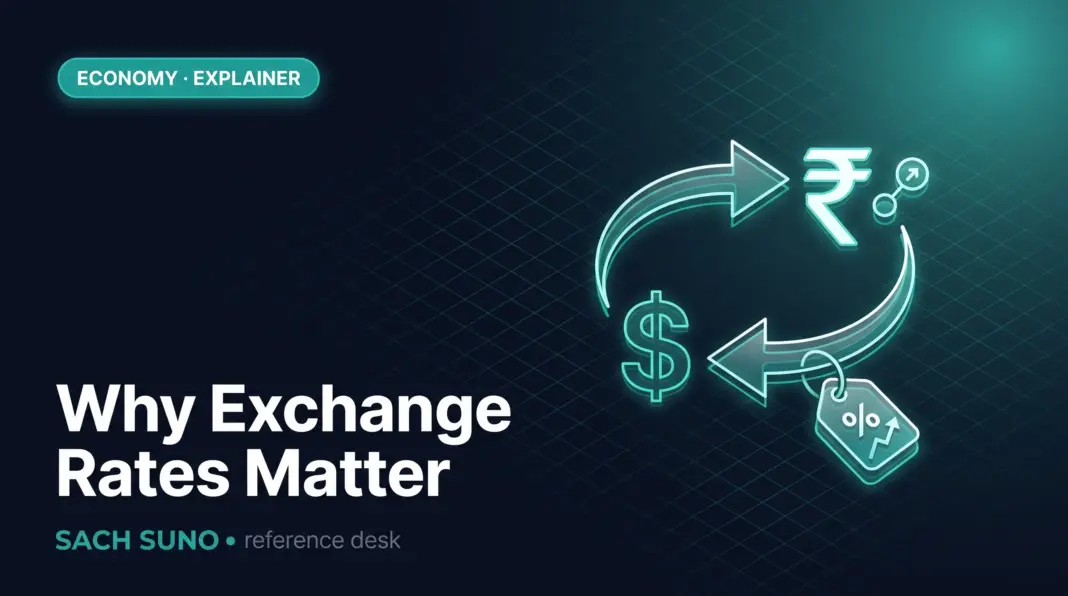
The exchange rate can look like a financial-market number, but it reaches everyday life through imports, fuel, business costs, debt payments, and expectations about inflation.
Why This Matters
Pakistan imports many essential inputs. When the rupee weakens, imported goods and imported components can become more expensive. The effect is not instant for every product, but it can spread through the economy.
Key Takeaways
- A weaker currency can raise the local cost of imports.
- Fuel and energy costs can carry exchange-rate effects into transport and production.
- Businesses may change prices because of actual costs or expected replacement costs.
- Exchange-rate stability depends on confidence, reserves, trade flows, and financing.
Imports Create the First Link
If a good, machine, raw material, or fuel is priced in foreign currency, a weaker rupee can increase its local cost. Companies then decide whether to absorb the cost or pass it to consumers.
Expectations Can Move Faster Than Costs
Sometimes prices rise before new imported stock arrives because sellers think replacement stock will cost more. That is why expectations and confidence matter alongside actual import invoices.
Not Every Price Changes the Same Way
Locally produced goods with local inputs may be less directly affected. Imported goods, fuel-intensive goods, and products with imported components are usually more exposed.
Useful Public References
Editorial Note
Sach Suno publishes explainers to help readers slow down, check claims, and understand the context behind public issues. This article is intended as background information, not breaking news or financial advice.
Additional Context for Readers
Exchange rates matter because Pakistan imports fuel, machinery, edible oil, medicines, industrial inputs, and many other goods priced directly or indirectly in foreign currency. When the rupee weakens, import costs can rise even before consumers understand why prices are changing.
The effect is not automatic or equal across all products. Businesses may absorb some costs, inventories may delay price changes, government taxes can amplify or reduce the impact, and global commodity prices may move at the same time. That is why exchange-rate stories need context.
A useful test is to ask whether a product depends on imported inputs, how quickly sellers reprice, and whether wages are rising at the same pace. For households, the exchange rate becomes real when it reaches fuel, electricity, transport, and food bills.
Useful Public References
- State Bank of Pakistan: Exchange rates
- State Bank of Pakistan: Inflation Monitor
- World Bank Data: Official exchange rate
Last reviewed: 2026-05-07.