
The 2026 FIFA World Cup will be the largest edition of the tournament so far, with 48 teams, 104 matches, and host cities across Canada, Mexico, and the United States. That scale creates a planning challenge that goes beyond football tactics: weather could affect players, spectators, transport, and scheduling.
A useful weather explainer should not predict exact match-day conditions weeks in advance. Instead, it should explain the types of risk that organizers and fans need to consider: extreme heat, humidity, thunderstorms, lightning delays, air quality, and long-distance travel between climates.
What the tournament schedule changes
FIFA says the tournament begins on 11 June 2026 in Mexico City and ends on 19 July 2026 in New York New Jersey. Sixteen host cities are involved, from Vancouver and Toronto to Monterrey, Mexico City, Miami, Dallas, Houston, Kansas City, Los Angeles, and the New York/New Jersey area.
That spread means the tournament is exposed to several summer weather patterns at once. A match day in Vancouver may have very different risks from one in Dallas, Miami, or Monterrey.
Heat is the most obvious concern
Summer heat is a player-health and crowd-management issue. BBC Sport has reported concerns from sports-climate researchers that several host cities could face difficult heat conditions during the tournament window. Heat risk is not only about the players; thousands of fans, staff, volunteers, security workers, and media teams may spend hours outdoors.
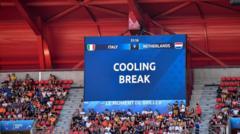
NOAA heat-safety guidance emphasizes that high temperatures can become dangerous when the body cannot cool itself effectively. Shade, hydration, cooling breaks, medical planning, and clear fan information are therefore practical safety tools rather than optional extras.
Storms and delays can affect the schedule
Thunderstorms, lightning, and severe rain can interrupt matches and transport. Because the tournament is spread across a large region, one city may be facing heat while another deals with storms. Broadcast schedules and fan travel plans may therefore need flexibility.
The point is not to forecast chaos. It is to explain why contingency planning matters when a tournament operates across three countries and multiple climate zones.
What fans should watch
Fans should follow official venue guidance, local weather alerts, and public transport information. Those travelling between cities should also expect different climates and allow time for heat, storms, airport delays, and border or security checks.
For AdSense-readiness, the article should avoid unsupported claims that matches will definitely be cancelled. A safer and more useful framing is that weather is a real operational risk that organizers are expected to manage.
Practical planning for fans and organisers
Weather risk becomes more manageable when it is planned for before match day. Organizers can use shaded queues, water refill points, cooling areas, medical teams, lightning protocols, transit updates, and clear multilingual alerts. Fans can check local forecasts, leave extra travel time, carry water where venue rules allow, and learn the signs of heat stress.
Because the tournament spans three countries, the information challenge is almost as important as the weather itself. A supporter travelling from Vancouver to Dallas or from Toronto to Monterrey may face very different temperatures, humidity, and storm patterns within a few days. A good article helps people anticipate that range without pretending to forecast every match.
Why the issue is bigger than one tournament
Heat and severe weather are becoming recurring problems for outdoor sport. The 2026 World Cup is a useful case because its size makes those problems visible. The long-term question is how sports bodies balance global expansion, player welfare, fan safety, television schedules, and climate realities.
Key takeaways
- The 2026 World Cup runs from 11 June to 19 July across Canada, Mexico, and the United States.
- Heat, humidity, storms, and travel distance are practical risks for players and fans.
- Long-range weather cannot be predicted precisely; the useful focus is preparedness.
- Official FIFA, local venue, and weather-agency guidance should lead any fan-safety decisions.

