Editor’s note: This article is an educational history explainer written for general readers. It uses public reference sources and avoids sensational or unsupported claims.
Key Takeaways
- South Asia was a central bridge between the Middle East, East Africa, Central Asia, and Southeast Asia.
- Trade carried ideas, languages, religious traditions, and technologies as well as goods.
- Maritime history helps explain why coastal and river regions were so important.
More than caravans
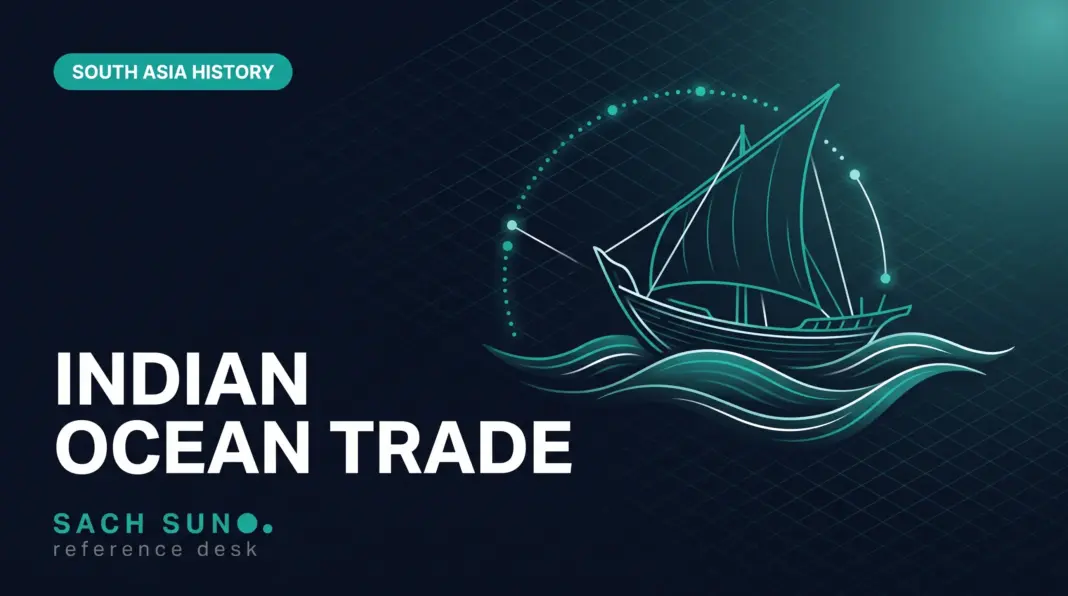
When people hear the phrase Silk Roads, they often imagine caravans moving across deserts. That image is only part of the story. Maritime routes across the Arabian Sea, Bay of Bengal, and wider Indian Ocean were just as important. South Asia sat between western Asia, East Africa, Southeast Asia, and China, making the region a natural meeting place for merchants and travelers.
The Indian Ocean trade was shaped by monsoon winds. Sailors learned when winds would help ships move west or east, turning seasonal weather into a commercial calendar. Ports became places where goods were exchanged, but also where languages, religious practices, food habits, artistic styles, and technologies traveled.
Goods, people, and ideas
South Asia exported and imported many kinds of goods over different periods: textiles, spices, precious stones, metals, horses, rice, ceramics, and luxury items. Trade did not simply enrich rulers. It supported shipbuilders, brokers, translators, dock workers, financiers, artisans, and inland producers whose work moved through coastal networks.
Religious and cultural exchange followed the same routes. Buddhism, Hindu traditions, and later Islam moved through merchants, scholars, pilgrims, and communities linked by travel. This does not mean trade explains everything, but it does show why port cities often became culturally mixed and intellectually active.
The land-sea connection
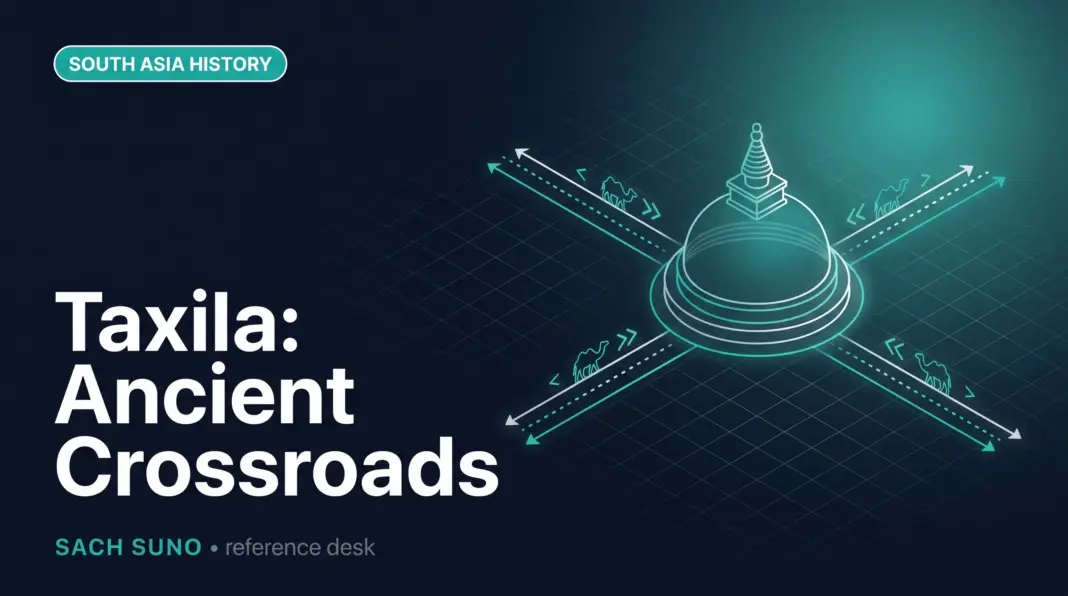
Maritime trade depended on inland routes. Goods from river valleys, craft towns, and agricultural regions had to reach ports. Ancient sites such as Taxila show how overland routes connected South Asia with Central and western Asia, while coastal routes linked the subcontinent with the wider ocean world. The region’s history was therefore both continental and maritime.
This connection matters because it prevents a narrow view of South Asia as isolated. The subcontinent was not sealed off by mountains and seas. Its geography created barriers, but also corridors. Traders, monks, soldiers, diplomats, and migrants crossed those corridors for centuries.
Why it still matters today
Modern debates about ports, regional trade, shipping lanes, and connectivity have deep historical roots. The Indian Ocean world reminds readers that South Asia’s prosperity has often depended on openness, infrastructure, and the ability to manage exchange without losing local identity.
Sources and Further Reading
Last reviewed: 2026-05-07.